
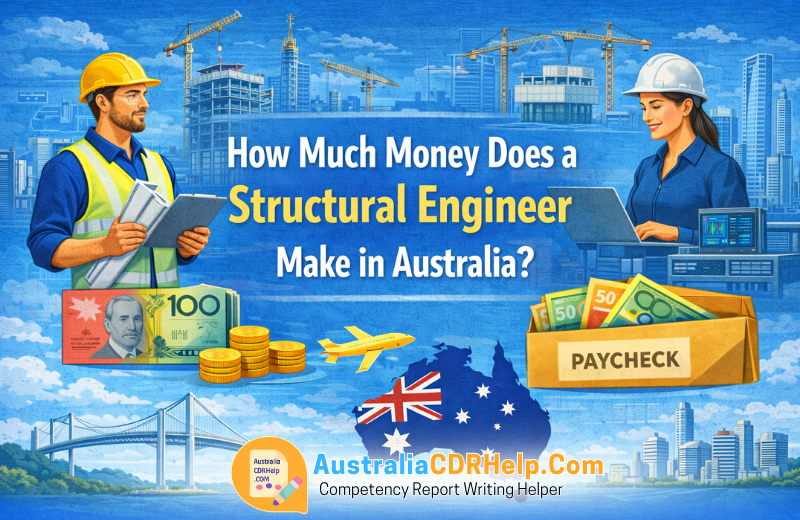
Australia remains a preferred destination for structural engineers due to consistent construction activity, long-term infrastructure planning, and steady professional demand. Ongoing investment across commercial buildings, transport infrastructure, residential developments, and public assets continues to support strong employment conditions.
Structural engineers play a central role in design safety, compliance, and performance, which is reflected in competitive salary levels across experience bands. On average, a structural engineer in Australia earns approximately AU$100,000 per year. Actual earnings differ based on experience, geographic location, project scale, and professional registration status.
Salaries tend to rise steadily as engineers move into higher-level, more responsible, and technical leadership roles. Compared with many international markets, remuneration remains favourable.
Salary Expectations by Experience Level for a Structural Engineer
- Entry-Level: Structural engineers with one to three years of experience earn around AU$75,000 to AU$85,000 per year.
- Mid-Level: Engineers with four to seven years of experience typically earn between AU$100,000 and AU$130,000 annually.
- Senior-Level: Engineers with over 8 years of experience earn an average annual salary of AU$145,000 to AU$165,000.
- Principal-Level: Engineers in leadership or highly specialised roles can earn AU$180,000 to AU$220,000 or higher per year.
Related Link ⇒ CDR for Structural Engineer
What Impacts the Structural Engineer Salaries in Australia?
Several professional and market factors influence salary outcomes in the structural engineering field.
Key Factors Shaping Remuneration Include:
- Location: Major cities such as Sydney, Melbourne, Brisbane, and Perth offer higher salary ranges, driven by project volume and cost-of-living differences.
- Level of Experience: Earnings increase progressively with responsibility, independent decision-making, and project accountability.
- Industry Sector: Engineers working in private consultancies, mining-related construction, or large infrastructure projects usually earn higher salaries than in public sector roles.
- Qualifications and Registration: Engineers holding recognised Australian qualifications, NER registration, or CPEng status often access stronger salary opportunities.
- Technical Specialisation: Experience in seismic design, complex structural modelling, or high-rise developments improves earning potential.
How Structural Engineers Seeking High-Paying Roles Can Migrate to Australia?
Engineers trained outside Australia must complete a migration skills assessment through Engineers Australia. Applicants without accredited qualifications prepare a Competency Demonstration Report (CDR) for structural engineering to demonstrate professional capability. The CDR report evaluates engineering knowledge, applied skills, ethical responsibility, and communication ability.
A well-prepared submission aligned with assessment guidelines supports a positive outcome. Following a successful skills assessment, candidates may apply for relevant skilled migration visas and pursue long-term professional opportunities within Australia’s engineering sector.
AustraliaCDRHelp.Com – Professional CDR Support for Structural Engineering in Australia
Australia CDR Help provides structured CDR preparation support for structural engineers seeking Engineers Australia assessment outcomes. Our CDR writers team focuses on accurate competency mapping, alignment with Australian standards, and clear presentation of engineering responsibilities.
We work closely with applicants to reflect genuine project experience and professional judgement. Through careful review and technical clarity, our services support confident submissions and help engineers progress toward skilled migration opportunities in Australia.
Related Blog ⇒ How to Write CDR for Structural Engineering?