
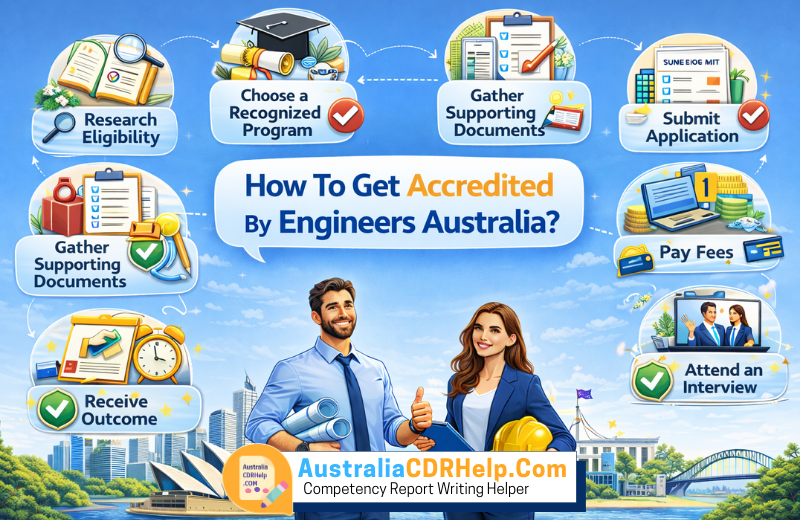
To work as a professional engineer in Australia or to apply for a skilled migration visa, you must obtain a positive Skills Assessment from Engineers Australia (EA). This accreditation process validates that your international or domestic qualifications and work experience align with the Australian standards for the engineering profession.
Determining Your Assessment Pathway
The first step in your accreditation journey is identifying which assessment pathway applies to your specific qualification. Engineers Australia recognises degrees based on the country of origin and the accreditation status of the university at the time of your graduation.
If you are looking to get accredited by Engineers Australia, here are the top five pathways you can consider.
The Five Primary Pathways for Accreditation
- Australian Qualifications: For those who have completed an EA-accredited undergraduate or postgraduate engineering degree within Australia.
- Washington Accord: This applies to professional engineering degrees awarded by signatories to the Washington Accord.
- Sydney Accord: Specifically for engineering technologist qualifications from signatory countries.
- Dublin Accord: Designed for engineering associate/technician qualifications from signatory countries.
- Competency Demonstration Report (CDR): If your qualification is from a non-signatory country or is not accredited by an Accord, you must follow the CDR assessment pathway to prove your technical competency.
Preparing the Competency Demonstration Report (CDR) for Engineers Australia
If you do not fall under the Accord-based pathways, the CDR is the most critical part of your application. You are required to draft a technical report that demonstrates how you have applied your engineering knowledge in real-world scenarios. This report is not a CV; it is a narrative, evidence-based document that maps your skills against the National Engineering Register (NER) competencies.
To build a successful CDR, you must provide three distinct elements that showcase your professional growth and technical depth.
Essential Components of a CDR
- Continuing Professional Development (CPD): A list of all formal and informal learning you have undertaken since graduation, including workshops, seminars, and private study.
- Three Career Episodes: These are detailed essays, each focusing on a specific engineering project or task you handled. You should write these in the first person (“I designed,” “I calculated”) to highlight your personal contribution rather than the team’s overall work.
- Summary Statement: This is the cross-referencing document where you link specific paragraphs from your Career Episodes to the competency elements required by Engineers Australia.
Related Link ⇒ CDR for Engineers Australia
Mandatory Supporting Documentation
Once your technical reports are drafted, you must compile a comprehensive set of supporting documents. Every claim you make regarding your education or employment must be backed by official evidence. Engineers Australia is rigorous regarding the authenticity of these documents, so ensure all scans are high-quality and colour-coded from original versions.
You will need to provide your primary degree certificate, academic transcripts, and a detailed CV. If you are claiming points for work experience, you must also include official employment reference letters on company letterhead that detail your job title, duration of service, and core responsibilities. Additionally, unless you are exempt, you must provide a valid English language test result (PTE, IELTS, or TOEFL iBT) that meets the minimum score requirements for the engineering category.
Final Submission and Assessment Timelines
After you have uploaded all documents to the Engineers Australia portal and paid the relevant fee, your application enters the assessment queue. The standard processing time can take several weeks, but you can pay for “Fast Track” processing if you have an urgent visa deadline.
Once your assessment is complete, you will receive an Outcome Letter. This document is the official accreditation you need for your visa application or for registration as a professional engineer in various Australian states. Ensuring that your initial submission is accurate and follows the Migration Skills Assessment (MSA) booklet precisely is the most effective way to avoid delays or requests for additional information.
AustraliaCDRHelp.Com simplifies your journey to professional recognition by guiding you through the CDR pathway. Their experts craft high-quality Career Episodes and Summary Statements that satisfy all Engineers Australia accreditation standards.
Related Blog ⇒ How to Make CDR for Engineers Australia?